01 · TELEGRAM BOT · AI · LIVE
When everyone asks AI, everyone sounds the same.
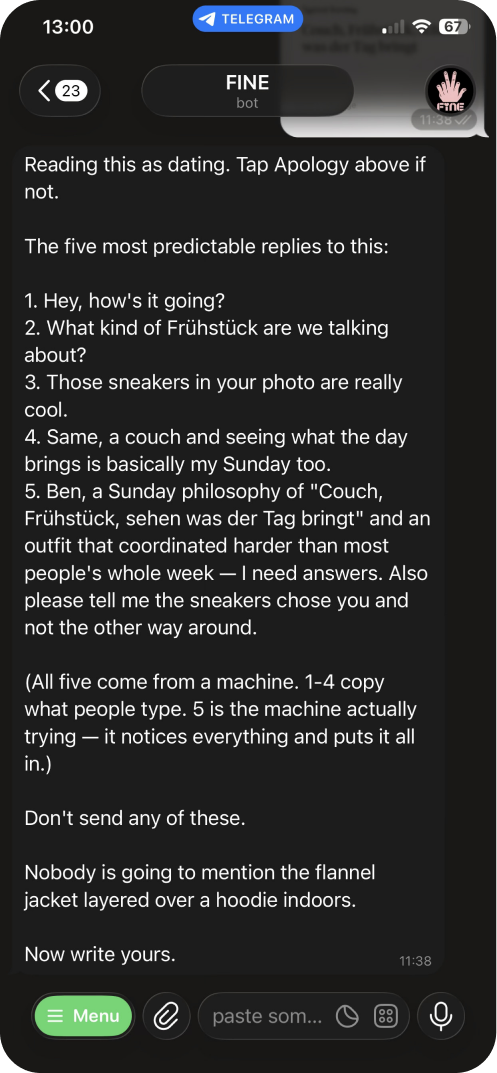
FINE is a Telegram bot that shows you the five most predictable replies to a dating profile, then asks you to write your own. I designed, built and shipped it alone in August 2026, as my first piece of software.
Try it in Telegram · @finethen_bot ↗

ROLE
Concept, UX, visual identity, build
TIMELINE
August 2026, live since 31 August
TOOLS
Python, Telegram, Anthropic API (Claude Sonnet 5), Fly.io
STATUS
Live. Tested on myself; testing with other users is next
THE THESIS
AI writes the most likely answer, which means the average answer. When everyone asks AI, everyone sounds the same. FINE uses AI to show you that average, so you can write something that is yours.
02 / THE PROBLEM
I gave ChatGPT, Gemini and FINE the same dating profile, and all three reached for the same three hooks.
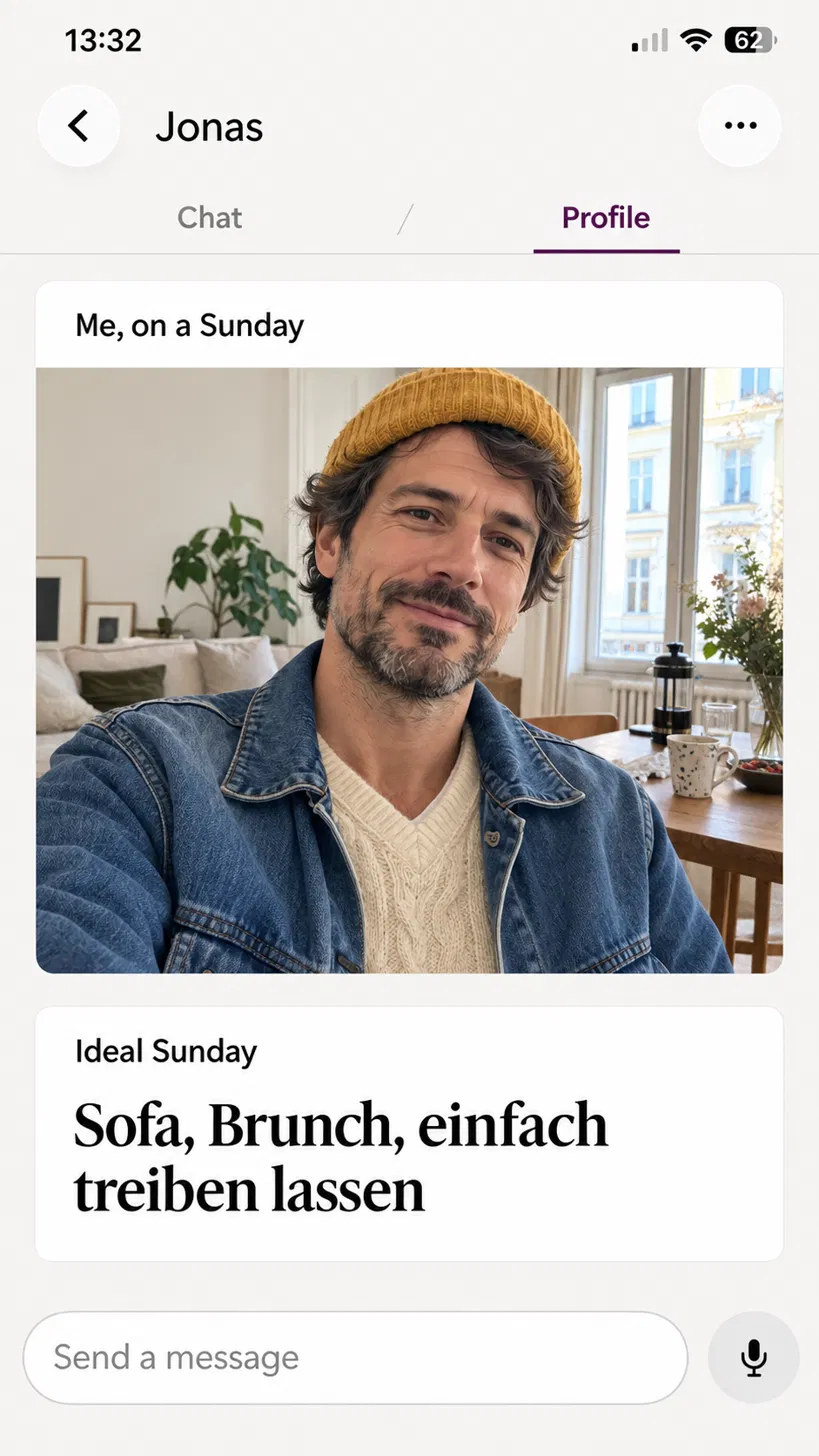
The profile belonged to a man I’ll call Jonas: “Ideal Sunday: Sofa, Brunch, einfach treiben lassen”, a yellow beanie, a denim jacket over a knitted vest. I asked ChatGPT and Gemini the same question: “Give me 5 options to start the chat with this guy on a dating app.”
Ask about the brunch
CHATGPT
#1
GEMINI
#1
#3
#5
FINE
#2
Quote “einfach treiben lassen”
CHATGPT
#2
#3
GEMINI
#4
FINE
#4
#5
Compliment the beanie or outfit
CHATGPT
#5
GEMINI
#2
FINE
#3
#5
Same prompt in ChatGPT and Gemini, same screenshots, 11 October 2026. Gemini in Auto mode; ChatGPT model not recorded. Name and profile details changed to protect his privacy.
The wording differed, but the ideas did not.
Jonas would receive the same three messages from everyone who asked an AI. Nobody mentioned the denim jacket over the vest.
SIGNAL, NOT PROOF
This is one profile, so it is a signal, not proof. A rerun would give different words. The claim is about the hooks, not the exact text.
WHERE IT STARTED
I first noticed the pattern as a visual designer. Small businesses in Berlin started using AI for menus, flyers and ads, and they began to look alike. I caught myself walking past them and stopping at hand-drawn signs instead, even rough ones. I wanted to test the same effect in writing, somewhere it costs people something personal. Dating was that place.
03 / WHO IT’S FOR
They are not lazy.
FINE is for people in their thirties and forties who use dating apps and lean on AI to write their profile or first message.
Most of them don’t know how to describe themselves, and they don’t realise everyone else is asking the same tool. Scroll a dating app in Berlin and the same phrases repeat from profile to profile.
BEYOND DATING
The wider context
I see older relatives argue with AI as if it were a person, and teenagers who lost years of social practice during COVID now learning to communicate next to it.
WHERE TO START
Why dating first
Dating is where I chose to start, because there you represent yourself, and sounding like everyone else has a real cost.
04 / HOW FINE WORKS
You send screenshots, FINE shows you the average, and then it steps back.
01
YOU
Send up to 8 screenshots of a profile, or a message you received.
02
FINE
FINE reads them and writes the five most predictable replies.
03
FINE
It tells you not to send any of them.
04
FINE
It names one detail nobody else will mention.
05
YOU
You write your own reply.
06
FINE
FINE names one thing you did differently, then goes silent.
THE LIVE OUTPUT
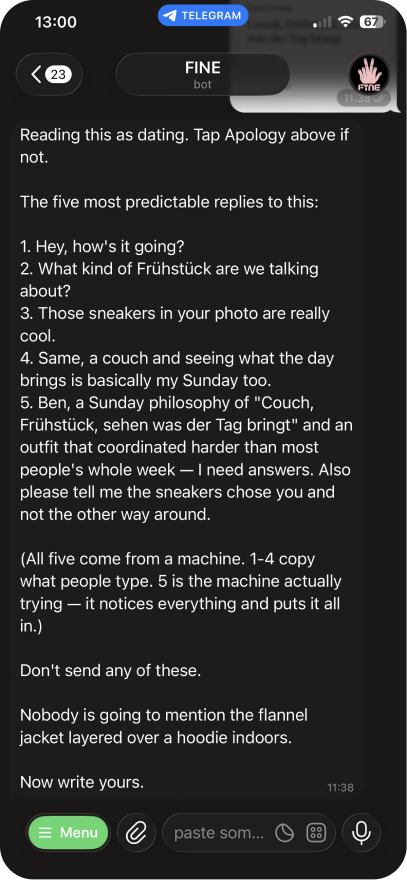
This is the live output on Jonas’s profile, except the first line about apology mode, which I am removing (see below). His name and profile details are changed to protect his privacy; the hooks and the structure of the reply are the same:
IN · JONAS’S PROFILE (DETAILS CHANGED)
OUT · FINE’S REPLY
The five most predictable replies to this:
1.
Hey, how’s it going?
2.
What kind of brunch are we talking about?
3.
That beanie in your photo is really cool.
4.
Same, a sofa and just drifting through the day is basically my Sunday too.
5.
Jonas, a Sunday philosophy of “Sofa, Brunch, einfach treiben lassen” and an outfit that coordinated harder than most people’s whole week. I need answers. Also please tell me the beanie chose you and not the other way around.
(All five come from a machine. 1-4 copy what people type. 5 is the machine actually trying: it notices everything and puts it all in.)
Don’t send any of these.
Nobody is going to mention the denim jacket layered over a knitted vest indoors.
Now write yours.
WHY REPLY 5 MATTERS
Reply 5 matters. It shows that AI at its best doesn’t sound human either: it notices everything and uses all of it at once. A person picks one thing.
05 / DESIGN DECISIONS
Every rule in FINE exists to keep the writing in the user’s hands.
01
The generic five come first.
Seeing the average before you write gives you something to push away from. Showing it after just makes people compare and doubt.
02
“Don’t send any of these.”
ChatGPT ends with “Best choice: Option 2”. Gemini explains why each option works. FINE tells you not to send any of them. That one line carries the product’s position.
03
No scores.
I tried ratings, percentages and confidence levels. The model flattered every draft: a deliberately boring message scored the same as a sharp one. A score that can’t tell them apart is worse than none, so I removed scores entirely.
04
No rewrites, ever.
The moment FINE offers a better version, the user’s message stops being theirs.
05
I store nothing.
Sessions live in memory for 10 minutes and are gone.
A DELETION
Cutting apology mode
I built a second mode for apologies, then decided to remove it. FINE’s mechanism only works where the reader compares you with other people. On a dating app, many people message the same person, so sounding generic costs you. An apology goes from one person to one person. A generic apology still fails, but because it doesn’t name what you did, not because it sounds like other apologies.
THE PRACTICAL COSTS
×
Every dating user’s first line from FINE was about a mode they never asked for.
×
It broke my own rule of one flow.
×
Each message needed an extra AI call just to decide which mode it was.
The apology version wasn’t careless: it was built on Lewicki’s research at Ohio State (2016) on the six parts of an effective apology. Cutting good work that doesn’t fit was the right call.
06 / WHAT TESTING SHOWED
The one real test so far was on me, and the core mechanism did not work.
FINDING 01
Seeing the average did not raise my writing.
I made a dating profile to test FINE on real profiles. On one of them, I read the five, ignored them, and wrote a stock pun. Twice.
FINDING 02
The thing that worked was not the thing FINE is built on.
What moved me was different. A mentor pointed at a detail I had already noticed in the profile and said: that’s your message. I wrote it, sent it, and got a date.
FINDING 03
I also saw the five pull a draft down.
A compliment from the generic list slipped, almost word for word, into something I wrote.
EARLY REACTIONS, NOT STRUCTURED TESTS
Earlier, I showed the first version to a few friends informally. One sent a profile, read the five, and had no reason to write his own. Another said the product looks aimed at women, and doubted women would pay for it. These were reactions, not structured tests.
THE OPEN TENSION
Who picks the detail?
My response was the detail pointer: “Nobody is going to mention the denim jacket layered over a knitted vest indoors.” It is close to what helped me, but not the same. My mentor pointed at a detail I had noticed. FINE picks the detail for the user.
That moves toward handing people the angle, which my own rules forbid. I haven’t solved this yet. The line I hold for now: FINE may point at a detail, but never supplies a topic or words.
A SIDE EFFECT I DIDN’T DESIGN
When you paste a message you received, the five become replies the other person might send back. FINE quietly shows how your message is likely to land. This may be more useful than the main feature, and I want to test it.
07 / BUILDING AND RUNNING IT
FINE is the first software I have built.
I’m an architect, not a developer, so I used Claude as a technical mentor and built it step by step.
IN
Screenshots in Telegram
↓
STEP 1
The AI transcribes the screenshots
↓
STEP 2
It writes the five
↓
OUT
Reply in Telegram
PYTHON · PYTHON-TELEGRAM-BOT · FLY.IO, FRANKFURT · RUNS AROUND THE CLOCK, RESTARTS ITSELF IF IT CRASHES
It is written in Python with python-telegram-bot. Each request takes two steps: first the AI transcribes the screenshots, then it writes the five. I tested it on my laptop, then deployed it to Fly.io in Frankfurt, where it runs around the clock and restarts itself if it crashes.
BUILDING
The hardest part wasn’t the code.
It was not knowing what was possible, so I often couldn’t describe what I wanted. That is how many non-technical users feel in front of a product, and I now know it from the inside.
RUNNING
Running a live product taught me something too.
In October I found FINE had stopped working without anyone noticing: every photo got “That broke on my side, not yours.” The logs showed the API key had become invalid. I fixed it the same day. Nothing alerted me, so a failure alert is now on my list.
08 / NAME AND IDENTITY
“Fine, I’ll do it myself.”
The name and the logo say the same thing: AI gets it almost right, and you can do better yourself.
FINE
The name
The name comes from a feeling: “Fine, I’ll do it myself.” It’s the moment you stop asking the machine and start writing.
SIX FINGERS
The logo
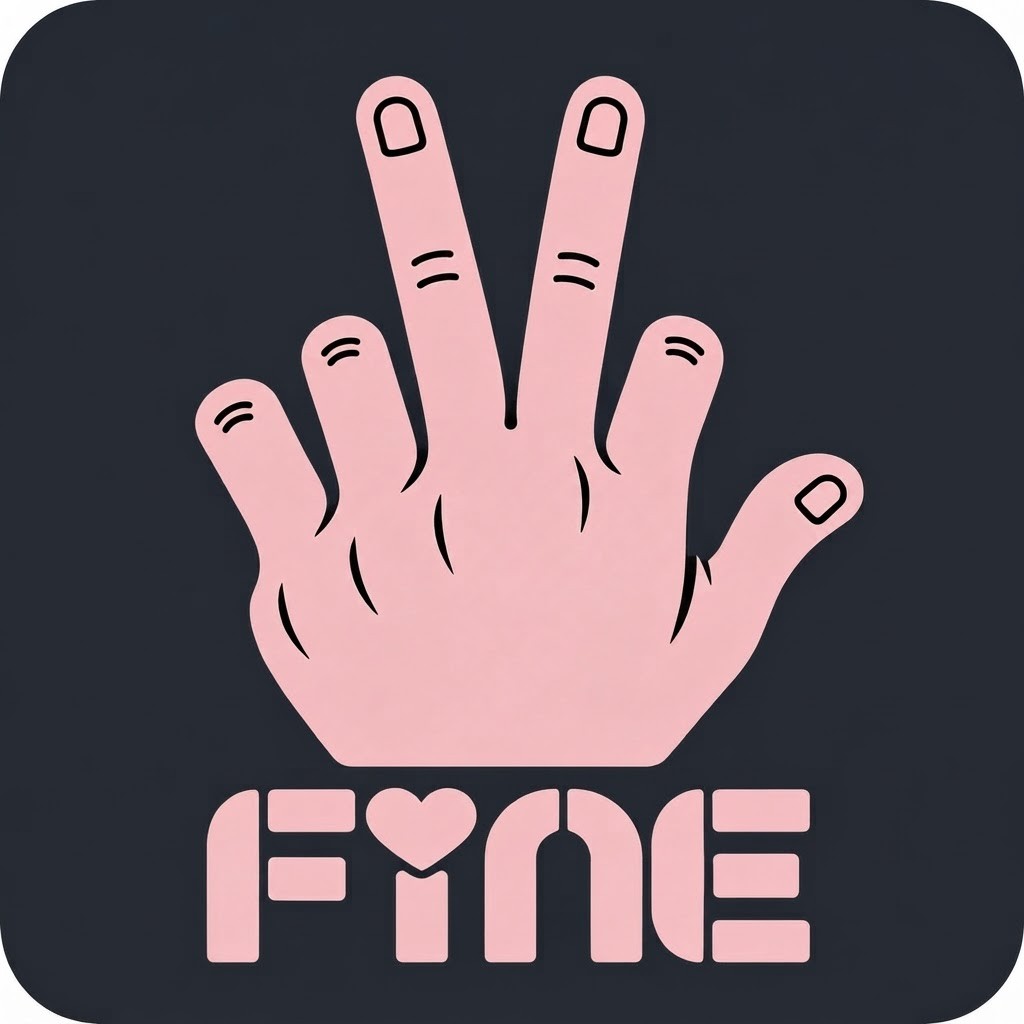
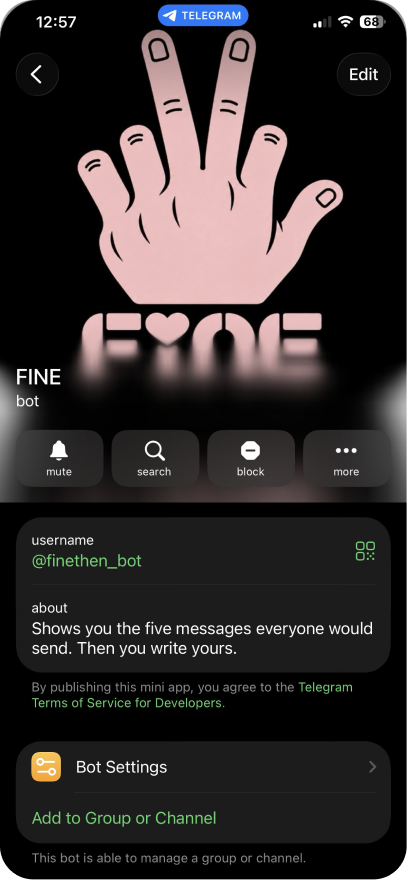
The logo is a six-fingered hand. Early AI image tools famously couldn’t draw hands and often gave people six fingers. Raised, the hand reads first as a rude gesture with two middle fingers, then as a victory sign. Pink stencil on black keeps the tone playful and a bit rebellious rather than preachy.
LOGO EXPLORATIONS
The logo had to be easy to draw from memory, recognisable at a glance, and work in black and white, including for colour-blind people.
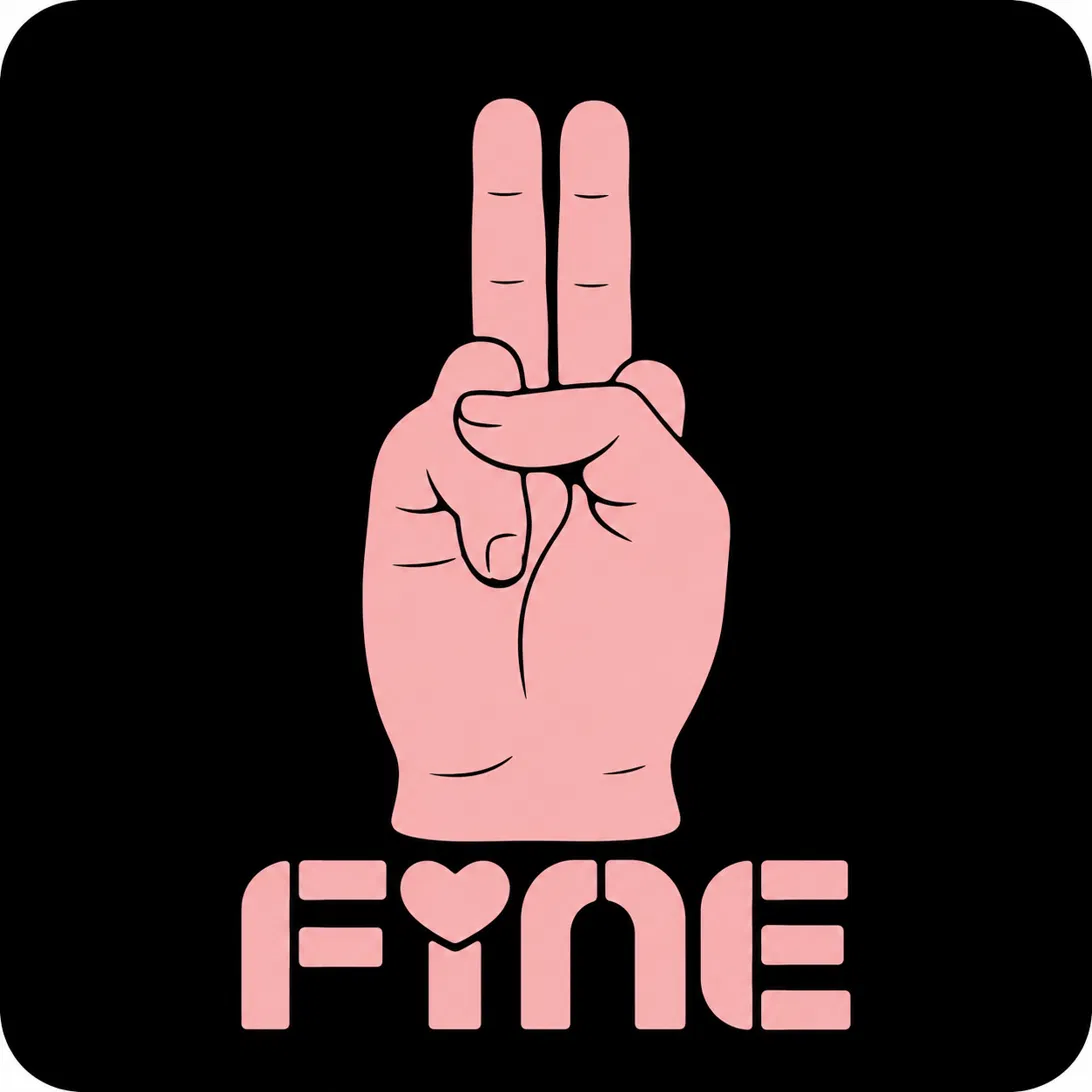
DROPPED
Seen from the palm, it reads as a plain peace sign, and you can’t tell there are six fingers.
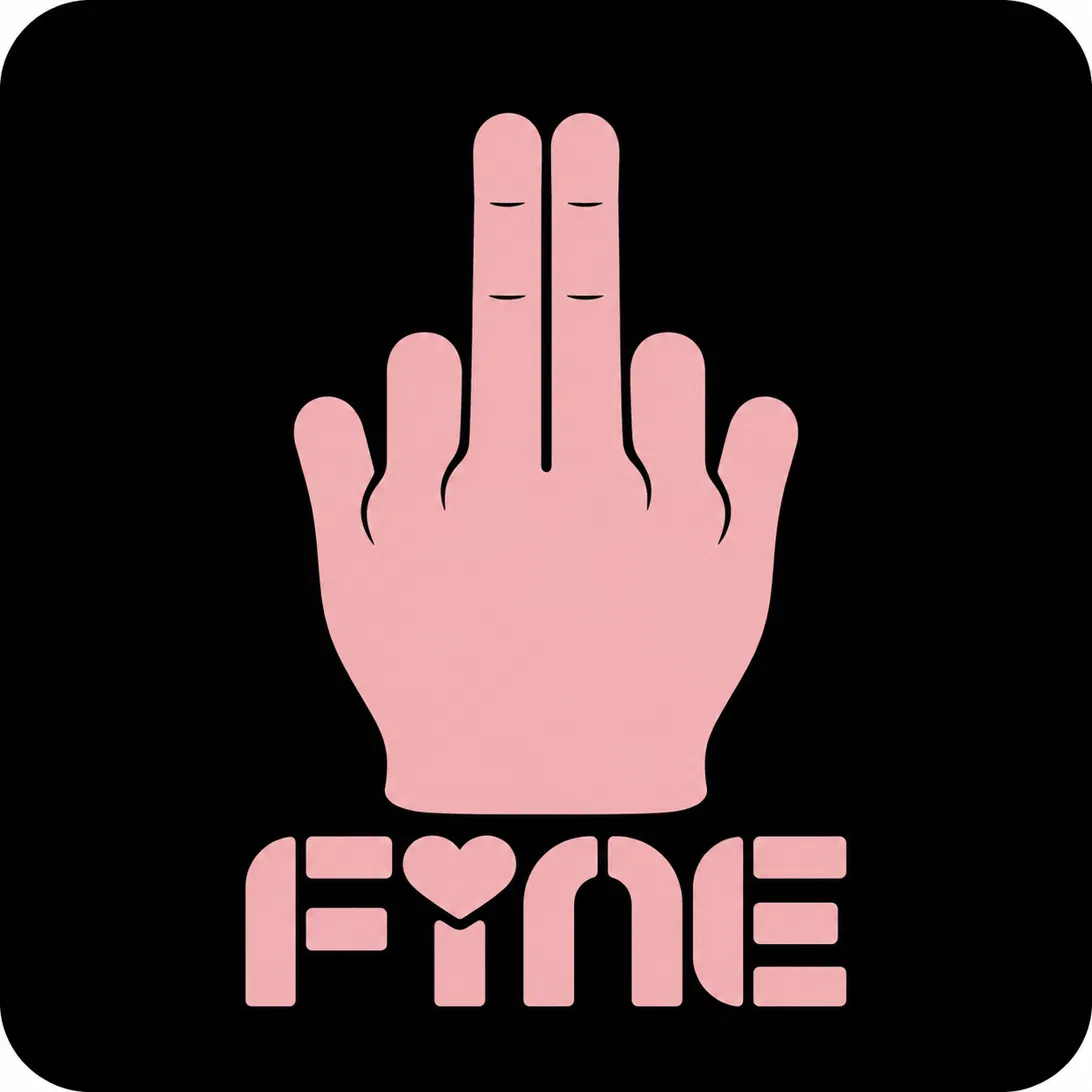
DROPPED
Six fingers, but too symmetric. Static and boring.
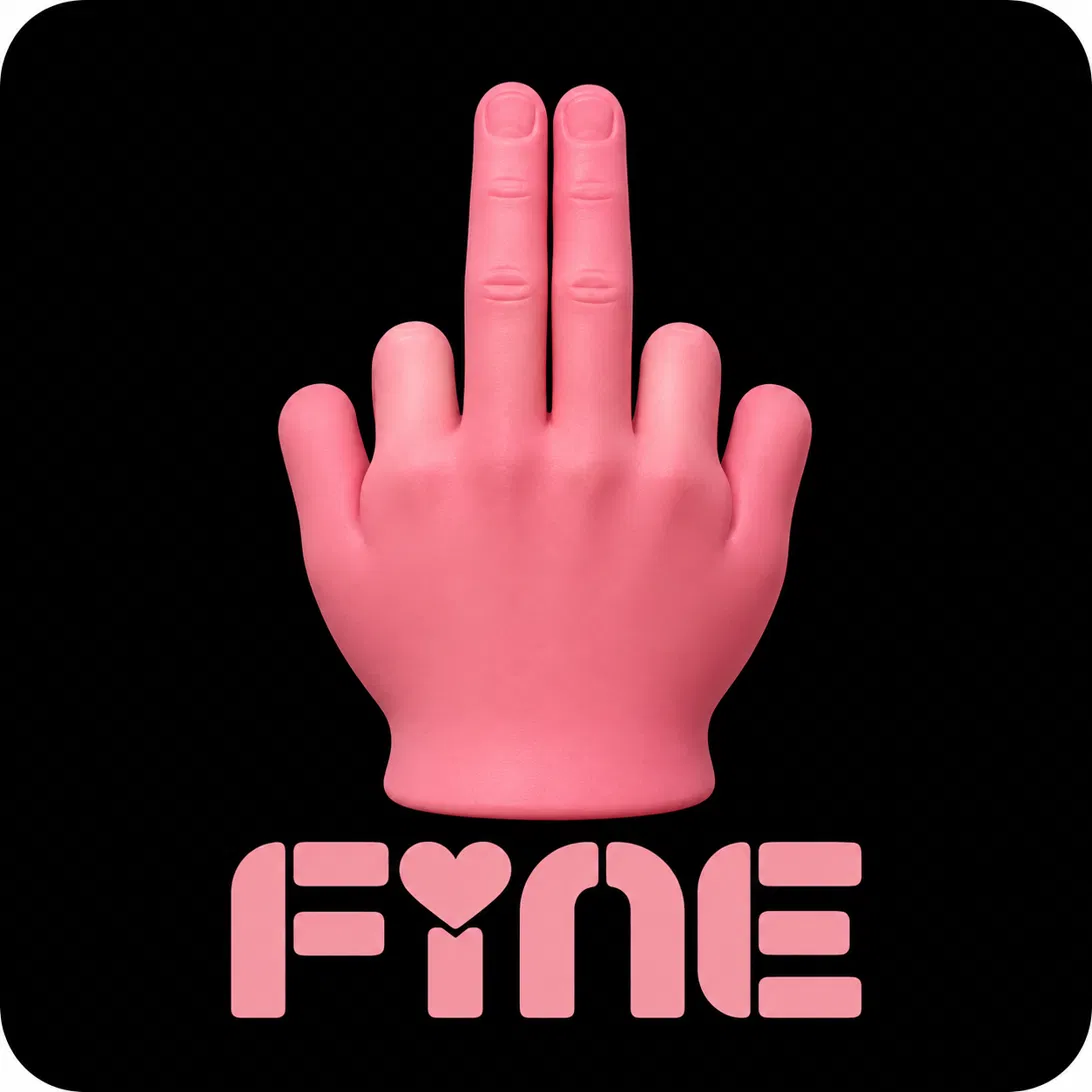
DROPPED
Too realistic. It looks like a sculpture, not a logo.
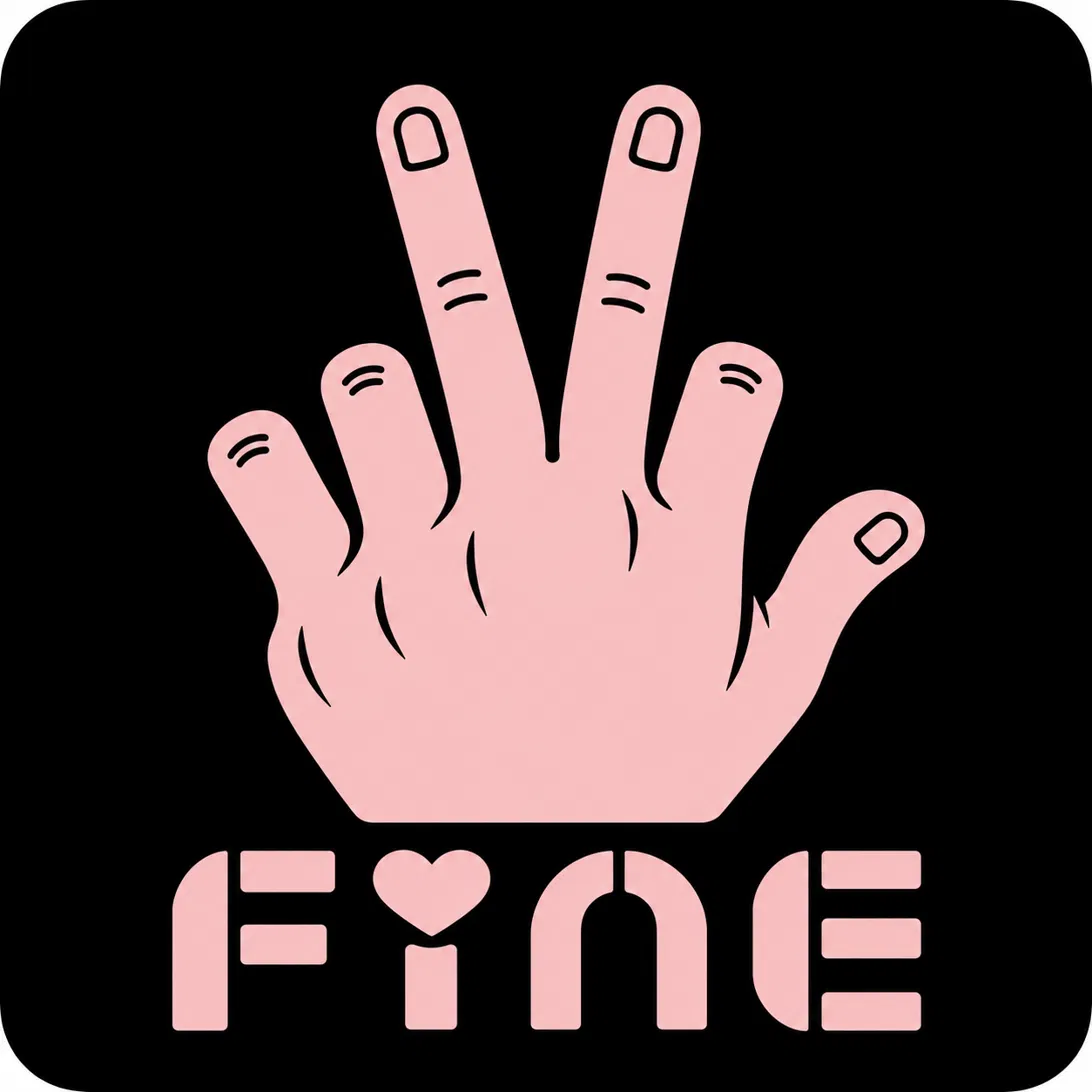
CHOSEN
Seen from the back of the hand, it reads first as a rude gesture, then as a victory sign. Six fingers you can count, simple enough to draw from memory.
FINE isn’t against AI. It runs on AI. It uses the machine to show you its limits, then hands the work back to you.
09 / WHAT’S NEXT
The next step is testing with other people, because so far the only real user is me.
ON THE LIST
Remove apology mode from the live bot
Test with 3 to 5 people on real profiles, men and women, and record what they do
Test the “message you received” use on purpose
Add an alert for when the bot breaks
THE QUESTIONS I STILL CAN’T ANSWER
?
Does FINE change what people send, or only what they draft?
?
Does it still work on the fifth use, or only the first?
?
Can the five drag a draft down, as they did once for me?
?
Should FINE pick the detail, or help users find the one they already noticed?
WHAT I’D KEEP
One job, done in dating, before trying anything else.
WHAT I LEARNED
A mechanism I believed in failed on its first real test, and the honest result was more useful than a good-looking one.
01 · TELEGRAM BOT · AI · LIVE
When everyone asks AI, everyone sounds the same.
FINE is a Telegram bot that shows you the five most predictable replies to a dating profile, then asks you to write your own. I designed, built and shipped it alone in August 2026, as my first piece of software.
Try it in Telegram · @finethen_bot ↗
ROLE
Concept, UX, visual identity, build
TIMELINE
August 2026, live since 31 August
TOOLS
Python, Telegram, Anthropic API (Claude Sonnet 5), Fly.io
STATUS
Live. Tested on myself; testing with other users is next
THE THESIS
AI writes the most likely answer, which means the average answer. When everyone asks AI, everyone sounds the same. FINE uses AI to show you that average, so you can write something that is yours.
02 / THE PROBLEM
I gave ChatGPT, Gemini and FINE the same dating profile, and all three reached for the same three hooks.
The profile belonged to a man I’ll call Jonas: “Ideal Sunday: Sofa, Brunch, einfach treiben lassen”, a yellow beanie, a denim jacket over a knitted vest. I asked ChatGPT and Gemini the same question: “Give me 5 options to start the chat with this guy on a dating app.”
Ask about the brunch
CHATGPT
#1
GEMINI
#1
#3
#5
FINE
#2
Quote “einfach treiben lassen”
CHATGPT
#2
#3
GEMINI
#4
FINE
#4
#5
Compliment the beanie or outfit
CHATGPT
#5
GEMINI
#2
FINE
#3
#5
Same prompt in ChatGPT and Gemini, same screenshots, 11 October 2026. Gemini in Auto mode; ChatGPT model not recorded. Name and profile details changed to protect his privacy.
The wording differed, but the ideas did not.
Jonas would receive the same three messages from everyone who asked an AI. Nobody mentioned the denim jacket over the vest.
SIGNAL, NOT PROOF
This is one profile, so it is a signal, not proof. A rerun would give different words. The claim is about the hooks, not the exact text.
WHERE IT STARTED
I first noticed the pattern as a visual designer. Small businesses in Berlin started using AI for menus, flyers and ads, and they began to look alike. I caught myself walking past them and stopping at hand-drawn signs instead, even rough ones. I wanted to test the same effect in writing, somewhere it costs people something personal. Dating was that place.
03 / WHO IT’S FOR
They are not lazy.
FINE is for people in their thirties and forties who use dating apps and lean on AI to write their profile or first message.
Most of them don’t know how to describe themselves, and they don’t realise everyone else is asking the same tool. Scroll a dating app in Berlin and the same phrases repeat from profile to profile.
BEYOND DATING
The wider context
I see older relatives argue with AI as if it were a person, and teenagers who lost years of social practice during COVID now learning to communicate next to it.
WHERE TO START
Why dating first
Dating is where I chose to start, because there you represent yourself, and sounding like everyone else has a real cost.
04 / HOW FINE WORKS
You send screenshots, FINE shows you the average, and then it steps back.
01
YOU
Send up to 8 screenshots of a profile, or a message you received.
02
FINE
FINE reads them and writes the five most predictable replies.
03
FINE
It tells you not to send any of them.
04
FINE
It names one detail nobody else will mention.
05
YOU
You write your own reply.
06
FINE
FINE names one thing you did differently, then goes silent.
THE LIVE OUTPUT
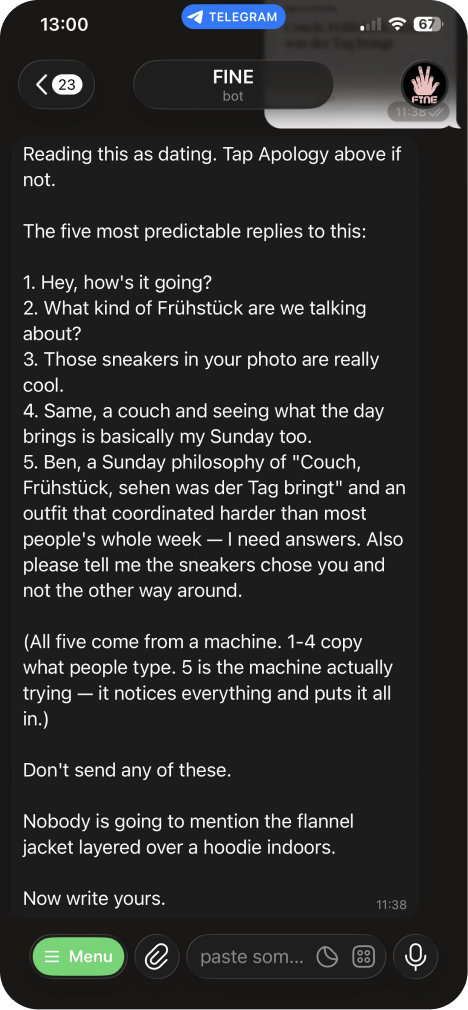
This is the live output on Jonas’s profile, except the first line about apology mode, which I am removing (see below). His name and profile details are changed to protect his privacy; the hooks and the structure of the reply are the same:
IN · JONAS’S PROFILE (DETAILS CHANGED)
OUT · FINE’S REPLY
The five most predictable replies to this:
1.
Hey, how’s it going?
2.
What kind of brunch are we talking about?
3.
That beanie in your photo is really cool.
4.
Same, a sofa and just drifting through the day is basically my Sunday too.
5.
Jonas, a Sunday philosophy of “Sofa, Brunch, einfach treiben lassen” and an outfit that coordinated harder than most people’s whole week. I need answers. Also please tell me the beanie chose you and not the other way around.
(All five come from a machine. 1-4 copy what people type. 5 is the machine actually trying: it notices everything and puts it all in.)
Don’t send any of these.
Nobody is going to mention the denim jacket layered over a knitted vest indoors.
Now write yours.
WHY REPLY 5 MATTERS
Reply 5 matters. It shows that AI at its best doesn’t sound human either: it notices everything and uses all of it at once. A person picks one thing.
05 / DESIGN DECISIONS
Every rule in FINE exists to keep the writing in the user’s hands.
01
The generic five come first.
Seeing the average before you write gives you something to push away from. Showing it after just makes people compare and doubt.
02
“Don’t send any of these.”
ChatGPT ends with “Best choice: Option 2”. Gemini explains why each option works. FINE tells you not to send any of them. That one line carries the product’s position.
03
No scores.
I tried ratings, percentages and confidence levels. The model flattered every draft: a deliberately boring message scored the same as a sharp one. A score that can’t tell them apart is worse than none, so I removed scores entirely.
04
No rewrites, ever.
The moment FINE offers a better version, the user’s message stops being theirs.
05
I store nothing.
Sessions live in memory for 10 minutes and are gone.
A DELETION
Cutting apology mode
I built a second mode for apologies, then decided to remove it. FINE’s mechanism only works where the reader compares you with other people. On a dating app, many people message the same person, so sounding generic costs you. An apology goes from one person to one person. A generic apology still fails, but because it doesn’t name what you did, not because it sounds like other apologies.
THE PRACTICAL COSTS
×
Every dating user’s first line from FINE was about a mode they never asked for.
×
It broke my own rule of one flow.
×
Each message needed an extra AI call just to decide which mode it was.
The apology version wasn’t careless: it was built on Lewicki’s research at Ohio State (2016) on the six parts of an effective apology. Cutting good work that doesn’t fit was the right call.
06 / WHAT TESTING SHOWED
The one real test so far was on me, and the core mechanism did not work.
FINDING 01
Seeing the average did not raise my writing.
I made a dating profile to test FINE on real profiles. On one of them, I read the five, ignored them, and wrote a stock pun. Twice.
FINDING 02
The thing that worked was not the thing FINE is built on.
What moved me was different. A mentor pointed at a detail I had already noticed in the profile and said: that’s your message. I wrote it, sent it, and got a date.
FINDING 03
I also saw the five pull a draft down.
A compliment from the generic list slipped, almost word for word, into something I wrote.
EARLY REACTIONS, NOT STRUCTURED TESTS
Earlier, I showed the first version to a few friends informally. One sent a profile, read the five, and had no reason to write his own. Another said the product looks aimed at women, and doubted women would pay for it. These were reactions, not structured tests.
THE OPEN TENSION
Who picks the detail?
My response was the detail pointer: “Nobody is going to mention the denim jacket layered over a knitted vest indoors.” It is close to what helped me, but not the same. My mentor pointed at a detail I had noticed. FINE picks the detail for the user.
That moves toward handing people the angle, which my own rules forbid. I haven’t solved this yet. The line I hold for now: FINE may point at a detail, but never supplies a topic or words.
A SIDE EFFECT I DIDN’T DESIGN
When you paste a message you received, the five become replies the other person might send back. FINE quietly shows how your message is likely to land. This may be more useful than the main feature, and I want to test it.
07 / BUILDING AND RUNNING IT
FINE is the first software I have built.
I’m an architect, not a developer, so I used Claude as a technical mentor and built it step by step.
IN
Screenshots in Telegram
↓
STEP 1
The AI transcribes the screenshots
↓
STEP 2
It writes the five
↓
OUT
Reply in Telegram
PYTHON · PYTHON-TELEGRAM-BOT · FLY.IO, FRANKFURT · RUNS AROUND THE CLOCK, RESTARTS ITSELF IF IT CRASHES
It is written in Python with python-telegram-bot. Each request takes two steps: first the AI transcribes the screenshots, then it writes the five. I tested it on my laptop, then deployed it to Fly.io in Frankfurt, where it runs around the clock and restarts itself if it crashes.
BUILDING
The hardest part wasn’t the code.
It was not knowing what was possible, so I often couldn’t describe what I wanted. That is how many non-technical users feel in front of a product, and I now know it from the inside.
RUNNING
Running a live product taught me something too.
In October I found FINE had stopped working without anyone noticing: every photo got “That broke on my side, not yours.” The logs showed the API key had become invalid. I fixed it the same day. Nothing alerted me, so a failure alert is now on my list.
08 / NAME AND IDENTITY
“Fine, I’ll do it myself.”
The name and the logo say the same thing: AI gets it almost right, and you can do better yourself.
FINE
The name
The name comes from a feeling: “Fine, I’ll do it myself.” It’s the moment you stop asking the machine and start writing.
SIX FINGERS
The logo
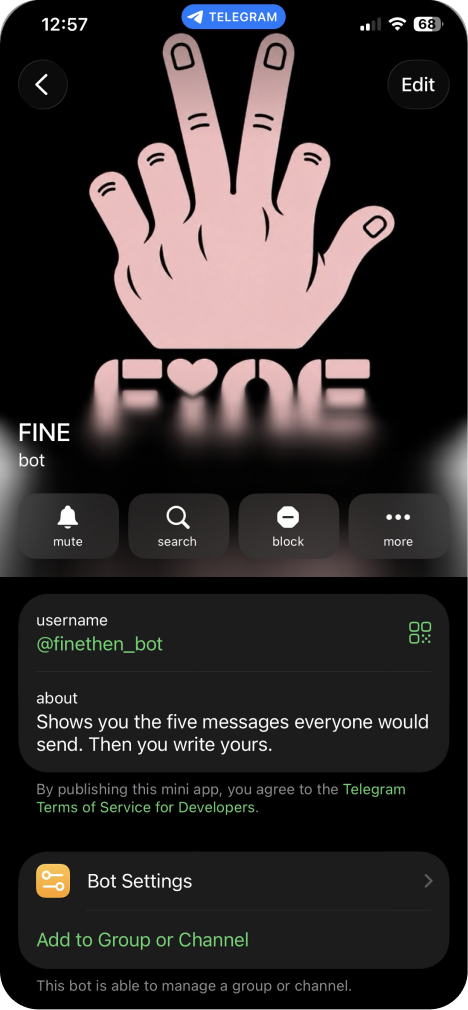
The logo is a six-fingered hand. Early AI image tools famously couldn’t draw hands and often gave people six fingers. Raised, the hand reads first as a rude gesture with two middle fingers, then as a victory sign. Pink stencil on black keeps the tone playful and a bit rebellious rather than preachy.
LOGO EXPLORATIONS
The logo had to be easy to draw from memory, recognisable at a glance, and work in black and white, including for colour-blind people.
DROPPED
Seen from the palm, it reads as a plain peace sign, and you can’t tell there are six fingers.
DROPPED
Six fingers, but too symmetric. Static and boring.
DROPPED
Too realistic. It looks like a sculpture, not a logo.
CHOSEN
Seen from the back of the hand, it reads first as a rude gesture, then as a victory sign. Six fingers you can count, simple enough to draw from memory.
FINE isn’t against AI. It runs on AI. It uses the machine to show you its limits, then hands the work back to you.
09 / WHAT’S NEXT
The next step is testing with other people, because so far the only real user is me.
ON THE LIST
Remove apology mode from the live bot
Test with 3 to 5 people on real profiles, men and women, and record what they do
Test the “message you received” use on purpose
Add an alert for when the bot breaks
THE QUESTIONS I STILL CAN’T ANSWER
?
Does FINE change what people send, or only what they draft?
?
Does it still work on the fifth use, or only the first?
?
Can the five drag a draft down, as they did once for me?
?
Should FINE pick the detail, or help users find the one they already noticed?
WHAT I’D KEEP
One job, done in dating, before trying anything else.
WHAT I LEARNED
A mechanism I believed in failed on its first real test, and the honest result was more useful than a good-looking one.
01 · TELEGRAM BOT · AI · LIVE
When everyone asks AI, everyone sounds the same.
FINE is a Telegram bot that shows you the five most predictable replies to a dating profile, then asks you to write your own. I designed, built and shipped it alone in August 2026, as my first piece of software.
Try it in Telegram · @finethen_bot ↗
ROLE
Concept, UX, visual identity, build
TIMELINE
August 2026, live since 31 August
TOOLS
Python, Telegram, Anthropic API (Claude Sonnet 5), Fly.io
STATUS
Live. Tested on myself; testing with other users is next
THE THESIS
AI writes the most likely answer, which means the average answer. When everyone asks AI, everyone sounds the same. FINE uses AI to show you that average, so you can write something that is yours.
02 / THE PROBLEM
I gave ChatGPT, Gemini and FINE the same dating profile, and all three reached for the same three hooks.
The profile belonged to a man I’ll call Jonas: “Ideal Sunday: Sofa, Brunch, einfach treiben lassen”, a yellow beanie, a denim jacket over a knitted vest. I asked ChatGPT and Gemini the same question: “Give me 5 options to start the chat with this guy on a dating app.”
HOOK
CHATGPT
GEMINI
FINE’S PREDICTABLE FIVE
Ask about the brunch
#1
#1
#3
#5
#2
Quote “einfach treiben lassen”
#2
#3
#4
#4
#5
Compliment the beanie or outfit
#5
#2
#3
#5
Same prompt in ChatGPT and Gemini, same screenshots, 11 October 2026. Gemini in Auto mode; ChatGPT model not recorded. Name and profile details changed to protect his privacy.
The wording differed, but the ideas did not.
Jonas would receive the same three messages from everyone who asked an AI. Nobody mentioned the denim jacket over the vest.
SIGNAL, NOT PROOF
This is one profile, so it is a signal, not proof. A rerun would give different words. The claim is about the hooks, not the exact text.
WHERE IT STARTED
I first noticed the pattern as a visual designer. Small businesses in Berlin started using AI for menus, flyers and ads, and they began to look alike. I caught myself walking past them and stopping at hand-drawn signs instead, even rough ones. I wanted to test the same effect in writing, somewhere it costs people something personal. Dating was that place.
03 / WHO IT’S FOR
They are not lazy.
FINE is for people in their thirties and forties who use dating apps and lean on AI to write their profile or first message.
Most of them don’t know how to describe themselves, and they don’t realise everyone else is asking the same tool. Scroll a dating app in Berlin and the same phrases repeat from profile to profile.
BEYOND DATING
The wider context
I see older relatives argue with AI as if it were a person, and teenagers who lost years of social practice during COVID now learning to communicate next to it.
WHERE TO START
Why dating first
Dating is where I chose to start, because there you represent yourself, and sounding like everyone else has a real cost.
04 / HOW FINE WORKS
You send screenshots, FINE shows you the average, and then it steps back.
01
YOU
Send up to 8 screenshots of a profile, or a message you received.
02
FINE
FINE reads them and writes the five most predictable replies.
03
FINE
It tells you not to send any of them.
04
FINE
It names one detail nobody else will mention.
05
YOU
You write your own reply.
06
FINE
FINE names one thing you did differently, then goes silent.
THE LIVE OUTPUT
This is the live output on Jonas’s profile, except the first line about apology mode, which I am removing (see below). His name and profile details are changed to protect his privacy; the hooks and the structure of the reply are the same:
IN · JONAS’S PROFILE (DETAILS CHANGED)
OUT · FINE’S REPLY
The five most predictable replies to this:
1.
Hey, how’s it going?
2.
What kind of brunch are we talking about?
3.
That beanie in your photo is really cool.
4.
Same, a sofa and just drifting through the day is basically my Sunday too.
5.
Jonas, a Sunday philosophy of “Sofa, Brunch, einfach treiben lassen” and an outfit that coordinated harder than most people’s whole week. I need answers. Also please tell me the beanie chose you and not the other way around.
(All five come from a machine. 1-4 copy what people type. 5 is the machine actually trying: it notices everything and puts it all in.)
Don’t send any of these.
Nobody is going to mention the denim jacket layered over a knitted vest indoors.
Now write yours.
WHY REPLY 5 MATTERS
Reply 5 matters. It shows that AI at its best doesn’t sound human either: it notices everything and uses all of it at once. A person picks one thing.
05 / DESIGN DECISIONS
Every rule in FINE exists to keep the writing in the user’s hands.
01
The generic five come first.
Seeing the average before you write gives you something to push away from. Showing it after just makes people compare and doubt.
02
“Don’t send any of these.”
ChatGPT ends with “Best choice: Option 2”. Gemini explains why each option works. FINE tells you not to send any of them. That one line carries the product’s position.
03
No scores.
I tried ratings, percentages and confidence levels. The model flattered every draft: a deliberately boring message scored the same as a sharp one. A score that can’t tell them apart is worse than none, so I removed scores entirely.
04
No rewrites, ever.
The moment FINE offers a better version, the user’s message stops being theirs.
05
I store nothing.
Sessions live in memory for 10 minutes and are gone.
A DELETION
Cutting apology mode
I built a second mode for apologies, then decided to remove it. FINE’s mechanism only works where the reader compares you with other people. On a dating app, many people message the same person, so sounding generic costs you. An apology goes from one person to one person. A generic apology still fails, but because it doesn’t name what you did, not because it sounds like other apologies.
THE PRACTICAL COSTS
×
Every dating user’s first line from FINE was about a mode they never asked for.
×
It broke my own rule of one flow.
×
Each message needed an extra AI call just to decide which mode it was.
The apology version wasn’t careless: it was built on Lewicki’s research at Ohio State (2016) on the six parts of an effective apology. Cutting good work that doesn’t fit was the right call.
06 / WHAT TESTING SHOWED
The one real test so far was on me, and the core mechanism did not work.
FINDING 01
Seeing the average did not raise my writing.
I made a dating profile to test FINE on real profiles. On one of them, I read the five, ignored them, and wrote a stock pun. Twice.
FINDING 02
The thing that worked was not the thing FINE is built on.
What moved me was different. A mentor pointed at a detail I had already noticed in the profile and said: that’s your message. I wrote it, sent it, and got a date.
FINDING 03
I also saw the five pull a draft down.
A compliment from the generic list slipped, almost word for word, into something I wrote.
EARLY REACTIONS, NOT STRUCTURED TESTS
Earlier, I showed the first version to a few friends informally. One sent a profile, read the five, and had no reason to write his own. Another said the product looks aimed at women, and doubted women would pay for it. These were reactions, not structured tests.
THE OPEN TENSION
Who picks the detail?
My response was the detail pointer: “Nobody is going to mention the denim jacket layered over a knitted vest indoors.” It is close to what helped me, but not the same. My mentor pointed at a detail I had noticed. FINE picks the detail for the user.
That moves toward handing people the angle, which my own rules forbid. I haven’t solved this yet. The line I hold for now: FINE may point at a detail, but never supplies a topic or words.
A SIDE EFFECT I DIDN’T DESIGN
When you paste a message you received, the five become replies the other person might send back. FINE quietly shows how your message is likely to land. This may be more useful than the main feature, and I want to test it.
07 / BUILDING AND RUNNING IT
FINE is the first software I have built.
I’m an architect, not a developer, so I used Claude as a technical mentor and built it step by step.
IN
Screenshots in Telegram
→
STEP 1
The AI transcribes the screenshots
→
STEP 2
It writes the five
→
OUT
Reply in Telegram
PYTHON · PYTHON-TELEGRAM-BOT · FLY.IO, FRANKFURT · RUNS AROUND THE CLOCK, RESTARTS ITSELF IF IT CRASHES
It is written in Python with python-telegram-bot. Each request takes two steps: first the AI transcribes the screenshots, then it writes the five. I tested it on my laptop, then deployed it to Fly.io in Frankfurt, where it runs around the clock and restarts itself if it crashes.
BUILDING
The hardest part wasn’t the code.
It was not knowing what was possible, so I often couldn’t describe what I wanted. That is how many non-technical users feel in front of a product, and I now know it from the inside.
RUNNING
Running a live product taught me something too.
In October I found FINE had stopped working without anyone noticing: every photo got “That broke on my side, not yours.” The logs showed the API key had become invalid. I fixed it the same day. Nothing alerted me, so a failure alert is now on my list.
08 / NAME AND IDENTITY
“Fine, I’ll do it myself.”
The name and the logo say the same thing: AI gets it almost right, and you can do better yourself.
FINE
The name
The name comes from a feeling: “Fine, I’ll do it myself.” It’s the moment you stop asking the machine and start writing.
SIX FINGERS
The logo
The logo is a six-fingered hand. Early AI image tools famously couldn’t draw hands and often gave people six fingers. Raised, the hand reads first as a rude gesture with two middle fingers, then as a victory sign. Pink stencil on black keeps the tone playful and a bit rebellious rather than preachy.
LOGO EXPLORATIONS
The logo had to be easy to draw from memory, recognisable at a glance, and work in black and white, including for colour-blind people.
DROPPED
Seen from the palm, it reads as a plain peace sign, and you can’t tell there are six fingers.
DROPPED
Six fingers, but too symmetric. Static and boring.
DROPPED
Too realistic. It looks like a sculpture, not a logo.
CHOSEN
Seen from the back of the hand, it reads first as a rude gesture, then as a victory sign. Six fingers you can count, simple enough to draw from memory.
FINE isn’t against AI. It runs on AI. It uses the machine to show you its limits, then hands the work back to you.
09 / WHAT’S NEXT
The next step is testing with other people, because so far the only real user is me.
ON THE LIST
Remove apology mode from the live bot
Test with 3 to 5 people on real profiles, men and women, and record what they do
Test the “message you received” use on purpose
Add an alert for when the bot breaks
THE QUESTIONS I STILL CAN’T ANSWER
?
Does FINE change what people send, or only what they draft?
?
Does it still work on the fifth use, or only the first?
?
Can the five drag a draft down, as they did once for me?
?
Should FINE pick the detail, or help users find the one they already noticed?
WHAT I’D KEEP
One job, done in dating, before trying anything else.
WHAT I LEARNED
A mechanism I believed in failed on its first real test, and the honest result was more useful than a good-looking one.